

How ISO 9001 Certification Supports Climate Sustainability and Responsible Business Growth
In today’s business landscape, sustainability is no longer optional—it is an essential responsibility. As climate change continues to affect global ecosystems, supply chains, and communities, organizations are under increasing pressure to adopt practices that reduce environmental impact while improving efficiency. While ISO 9001:2015 is widely known as a Quality Management System (QMS) standard, it also plays a powerful role in supporting climate sustainability, indirectly helping businesses reduce waste, energy consumption, and carbon footprint.
This article explores how ISO 9001 certification contributes to climate-friendly operations and why it is a valuable step for organizations seeking long-term sustainability.
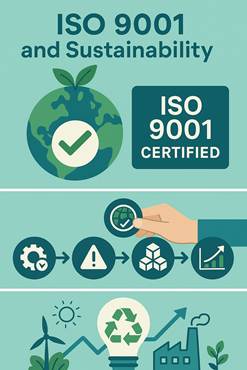
1. Strengthening Process Efficiency for Lower Environmental Impact
ISO 9001 requires organizations to map, control, and optimize their processes.
When processes become more efficient, they consume fewer resources, generate less waste, and require less energy—all of which reduce the environmental burden.
Examples include:
- Minimizing rework and scrap through better quality control
- Reducing energy consumption by eliminating process inefficiencies
- Streamlining supply chains to cut unnecessary transportation emissions
Improved quality is directly linked to sustainability because efficient processes require fewer raw materials and less fuel, thereby supporting climate-friendly operations.
2. Risk-Based Thinking Helps Organizations Manage Climate-Related Risks
Climate change introduces operational risks such as:
- Supply-chain disruption due to extreme weather
- Energy shortages or rising fuel costs
- Changing regulations related to emissions, waste, and sustainability
ISO 9001’s risk-based thinking approach prepares organizations to identify and mitigate these climate-related risks. This ensures that business continuity and environmental awareness go hand-in-hand.
3. Improved Resource Management Reduces Carbon Footprint
ISO 9001 focuses on identifying how resources—people, infrastructure, materials, and technology—are used. When companies monitor and control resource consumption, they naturally reduce their impact on the environment.
Examples:
- Monitoring energy use and optimizing production cycles
- Enhancing equipment maintenance to prevent energy loss
- Using data-driven decisions to reduce waste
Thus, ISO 9001 drives responsible consumption and supports global climate goals.
4. Enhancing Supplier Control for Sustainable Sourcing
ISO 9001 emphasizes supplier evaluation and performance monitoring.
By integrating sustainability criteria into supplier selection, organizations can:
- Choose suppliers committed to reduced carbon emissions
- Encourage sustainable packaging
- Support environmentally responsible raw materials
This creates a climate-conscious supply chain, reducing Scope 3 emissions and strengthening global sustainability.
5. Continuous Improvement Drives Climate-Friendly Innovation
At the heart of ISO 9001 is continual improvement.
When applied to sustainability, it encourages organizations to continually:
- Reduce energy usage
- Improve waste segregation and recycling
- Lower emissions through process innovation
- Adopt greener technologies
This cycle of improvement supports long-term climate responsibility and makes organizations more resilient.
6. Stakeholder Satisfaction Includes Environmental Responsibility
Modern customers prefer environmentally responsible brands. ISO 9001 helps organizations improve transparency, customer trust, and stakeholder engagement. Climate-friendly actions add value to the QMS by:
- Improving brand reputation
- Increasing customer loyalty
- Supporting corporate social responsibility (CSR) commitments
Sustainability becomes a competitive advantage.
Conclusion
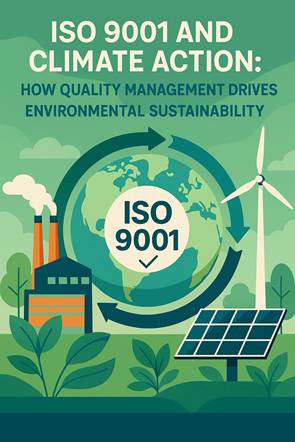
ISO 9001 may not be an environmental standard like ISO 14001, but its principles strongly support climate sustainability. By improving efficiency, reducing waste, managing risks, and encouraging continual improvement, ISO 9001 helps organizations contribute to global climate goals while enhancing overall business performance.
Implementing ISO 9001 is not just about quality—it is about building a responsible, future-focused, and climate-conscious organization.